Only Open: What One Month of Creating With Free Resources Actually Taught Us
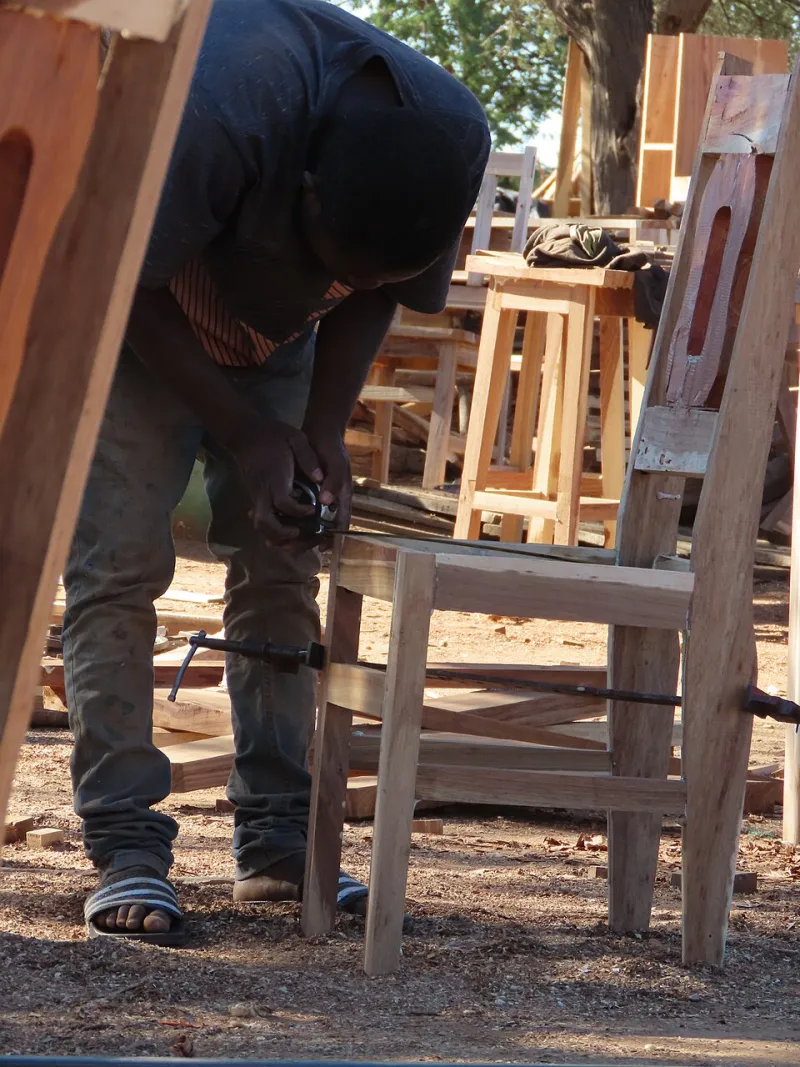
Photo: Martin Hipangwa, CC BY-SA 4.0, via Wikimedia Commons
Sometime around day four of our experiment, a graphic designer named Priya sent a message to the group chat that pretty much summed up the early experience: "I didn't realize how many of my 'creative instincts' were just muscle memory for paid tools."
That observation—and the month of creative work that surrounded it—is what this piece is about.
Back in the spring, we put out a call to creators in our community: spend 30 days building something real using only openly licensed content, tools, and resources. No Adobe suite. No stock photos behind a paywall. No proprietary fonts you licensed once and kind of forgot about. Every image, sound file, typeface, and line of code had to be traceable to an open license. We'd document what happened.
Twenty-three people took us up on it. Developers, musicians, visual artists, writers, a documentary filmmaker, and one very ambitious person who decided to build a full podcast from scratch. Here's what we found.
Setting the Rules (And Why That Was Harder Than Expected)
Before anyone made anything, we had to agree on what "open" actually meant. This took longer than anticipated, which was itself kind of instructive.
Does a tool licensed under GPL count? (Yes.) What about a font with a license that allows use but not modification? (We said no—modification rights matter.) What about AI tools trained on open datasets? (We had a whole argument about this and landed on "allowed, but disclose it.") What about using a platform like Google Docs to write? (Allowed—using a proprietary tool is different from using proprietary content.)
The rule-setting process forced participants to actually think about licensing in a way that most creators, honestly, never do. Several people admitted they had no idea what licenses their usual stock photo subscriptions carried, or whether the fonts on their computers were freely usable in commercial work. The exercise started generating value before anyone had produced a single thing.
We landed on this working definition: every creative input—images, audio, fonts, code libraries, video footage—had to be licensed under Creative Commons, GPL, MIT, or an equivalent open license that allowed modification and redistribution.
Week One: The Frustration Phase
Let's not sugarcoat it. The first week was rough for a lot of participants.
Jordan, a motion graphics artist from Chicago, spent two days trying to find open-licensed footage of urban street scenes that wasn't either technically poor quality or weirdly dated. "Every search led me to the same five Pexels clips," he said. "I started to understand why people just pay for stock footage."
The musician in our group, a bedroom producer from Atlanta named Marcus, ran into a different wall: most of the sample packs he relied on were commercially licensed, not openly licensed. He had to rebuild his workflow around Freesound.org and a handful of CC-licensed sample libraries. "It was like switching from a full grocery store to a farmers market," he said. "Way less selection, but I started actually looking at what I was picking up."
The writer in the group had the easiest time early on—text tools are largely open, and Project Gutenberg plus open-access academic databases gave her plenty of source material. But she hit her own wall when she realized she couldn't use most of the news photography she'd normally embed in her long-form pieces.
Week Two: The Pivot
Something shifted around day ten. Participants stopped trying to replicate their normal workflows with open tools and started adapting to what the open ecosystem actually offered.
Priya, the graphic designer, discovered that the constraint of working only with open fonts (Google Fonts, Font Squirrel, The League of Moveable Type) was pushing her toward typographic combinations she'd never tried before. "I was bored of my usual three fonts," she admitted. "Being forced to explore actually made my work more interesting."
Jordan stopped hunting for footage that matched his original vision and started building compositions around what he could find. "I had this clip from NASA's open media library—totally unexpected—and I built a whole piece around it. It's probably the best thing I've made in a year."
This is the part of the story that sounds like a TED Talk cliché but kept coming up authentically: constraints redirect creative energy rather than eliminating it. When your usual path is blocked, you find paths you didn't know existed.
The Tools That Surprised Everyone
A few open resources showed up repeatedly in participant reports as genuine revelations:
Openverse (the WordPress Foundation's open content search engine) proved far more useful than most participants expected, surfacing CC-licensed images across multiple repositories in a single search.
GIMP and Inkscape, the open-source alternatives to Photoshop and Illustrator, got a grudging respect from participants who'd written them off. "GIMP is not Photoshop," Priya said flatly. "But it does things Photoshop doesn't. I found myself using both in my head—thinking in GIMP for certain operations."
Freesound.org became Marcus's favorite discovery. The community-uploaded sound library is enormous, genuinely weird, and full of material that doesn't sound like every other producer's toolkit.
The Internet Archive was a consistent favorite. Decades of out-of-copyright music, film, and text, freely accessible. The documentary filmmaker in our group built an entire short film using Archive footage and said it gave her work a texture she couldn't have bought.
What the Month Actually Produced
By day 30, the group had collectively produced: three short films, two EP-length music projects, a complete magazine-style publication, four working web applications, a podcast (yes, the ambitious one finished it), and more visual design work than we can easily catalog.
Not all of it was great. Some pieces showed the strain of the constraints pretty visibly. But a surprising amount of it was genuinely strong work—work that participants were proud of and, in several cases, planned to continue developing.
Maybe more importantly, every single participant came out of the month with a fundamentally different relationship to open resources. Not as a compromise or a budget option, but as an actual creative ecosystem with its own character and possibilities.
"I thought I was going to spend the month missing my usual tools," Marcus said. "Instead I spent it discovering that there's a whole world of open creative work that I'd never bothered to look at. I'm not going back to ignoring it."
The Policy Angle Nobody Expected
Here's the thing that surprised us most: the month turned several participants into accidental advocates.
Dealing with the open ecosystem for 30 straight days made the policy questions viscerally real in a way that abstract arguments never had. Why are so many educational resources locked behind publisher paywalls? Why don't more government-funded research outputs default to open licensing? Why is finding high-quality open music so much harder than it should be?
Participants who'd never thought much about copyright policy came out of the month with opinions. Some started following organizations like Creative Commons and the Electronic Frontier Foundation. A few got involved in local advocacy around open educational resources.
Constraining yourself to the commons, it turns out, is a pretty effective way to understand why the commons matters—and why building it up is worth fighting for.
We're running it again in the fall. You should join us.