Paying the Commons: The DIY Money Systems Keeping Open Creators Alive
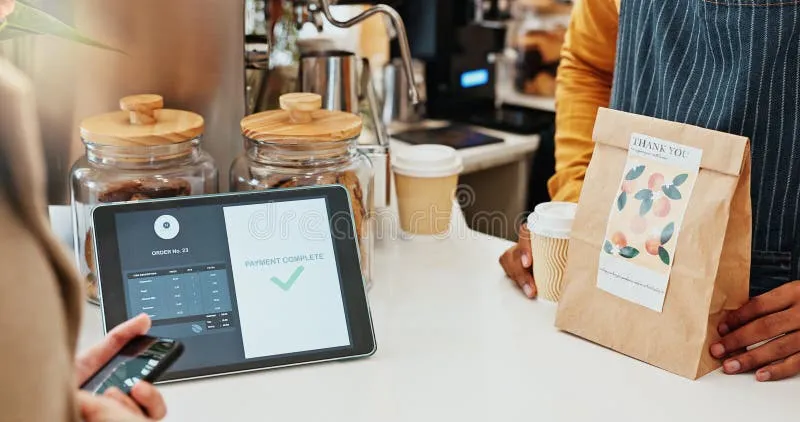
Photo: independent creator receiving digital payment laptop coffee shop, via thumbs.dreamstime.com
Let's set the scene. You've spent six months building an open-source font family. It's clean, versatile, free to download. Within a year, it's on something like 40,000 websites. Design blogs are raving. You're getting tagged constantly on social media by people who love it.
Your bank account? Unmoved.
This is the classic open-source creator problem, and it's not going away on its own. But what's changing—quietly, steadily, and in some pretty creative ways—is the infrastructure being built around the problem. Open-source and Creative Commons creators are constructing their own economic ecosystems, and the results range from scrappy-but-functional to genuinely revolutionary.
The Old Models and Why They Broke
For a long time, the dominant monetization path for open creators looked something like this: release freely, build a reputation, hope someone hires you for consulting or custom work. It's a model that works reasonably well for developers and designers with specific technical skills. It works much less well for musicians, writers, visual artists, and the vast middle of the creative commons.
Donation buttons were another early experiment. PayPal links in README files, tip jars on personal websites. The conversion rates were, charitably, discouraging. People who download free things are not, as a rule, in the habit of then paying for them voluntarily. The psychology just doesn't work that way.
Platforms like Patreon changed the equation somewhat by reframing the transaction. Instead of "please donate," the pitch became "subscribe for ongoing access to my process, my community, my extras." That shift—from charity to value exchange—made a real difference. Plenty of open creators have built stable income through Patreon, particularly when they pair it with regular content: behind-the-scenes posts, early access, Discord communities.
But Patreon is a private, for-profit company with its own fee structure and its own interests. And as the platform has grown, so has creator anxiety about what happens when those interests diverge from their own.
The Builders Doing It Differently
The more interesting stories are happening at the edges of the mainstream platforms.
Take the world of open-source music. Platforms like Bandcamp—before its acquisition drama rattled creator confidence—offered a model where musicians could set their own prices, including zero, while making it easy for fans to pay more. The "pay what you want" model, it turns out, generates real revenue when the creator has built genuine audience trust. Artists releasing under CC licenses have found that transparency about their licensing actually increases fan willingness to pay: "this person is giving you something real, consider giving something back."
In the developer world, GitHub Sponsors has emerged as a meaningful tool. It's not perfect—it's a Microsoft product, which gives plenty of open-source purists pause—but it's normalized the idea of directly funding the humans behind the code. Some maintainers are pulling in enough to work full-time on their projects. Others are supplementing day jobs in ways that make the work sustainable.
The mutual aid angle is less talked about but arguably more interesting from a commons-philosophy standpoint. Some open-source communities have built internal funding pools where more financially successful members contribute to support those doing critical but less visible maintenance work. It's basically a redistribution model, and it maps cleanly onto the collaborative values that animated open source to begin with.
Blockchain: Promise, Hype, and the Messy Reality
No conversation about alternative creator payment systems can avoid the blockchain question, so let's get into it.
The theoretical appeal is real: a system where creators can attach payment conditions directly to their work, receive micropayments automatically when it's used, and cut out platform intermediaries entirely. Projects like Audius (for music) and various NFT-adjacent experiments have tried to build toward this vision.
The actual results have been... mixed, to put it generously. Audius has struggled with governance issues and the general volatility of crypto markets. NFTs generated enormous hype and then an enormous hangover. The environmental costs of proof-of-work blockchains became a genuine ethical liability for creators who care about sustainability—which is most of the open-source community.
What's survived the hype cycle is more modest: some creators are using stablecoin-based tip systems as a lower-friction alternative to international payment processors. A few open-source projects have experimented with on-chain governance of community funds. These aren't revolutionary, but they're functional.
The honest take is that blockchain-based creator payments work best as one tool in a toolkit, not as a silver bullet. And anyone selling you a silver bullet in this space is probably selling something else too.
Big Tech Comes Knocking
Here's where things get complicated. The success of these alternative payment models—even at modest scale—has attracted corporate attention. YouTube has expanded its monetization programs. Spotify has introduced tools for podcasters. Amazon has its own creator fund programs. Microsoft bought GitHub and then launched GitHub Sponsors.
The pattern is consistent: a creator economy tool that works gets noticed by a platform with distribution, and the platform builds or acquires a version of it.
For individual creators, this creates a genuine dilemma. Corporate platforms offer reach and convenience that scrappy alternatives can't match. But they also extract fees, impose content policies, and can change the rules whenever it suits their business model. The history of creator platforms is largely a history of terms that shift against creators once the platform achieves dominance.
Several open-source community leaders have started talking explicitly about "platform capture"—the risk that tools built for creator liberation get absorbed into the same corporate structures they were designed to circumvent. The conversation around this is getting more sophisticated, with some communities deliberately building on open, federated infrastructure (think Mastodon-style approaches) rather than centralized platforms, even when centralized options are easier.
What Actually Works (Right Now)
If you're an open creator trying to figure out your economic model today, the honest answer is: probably a combination of things. The creators who are making it work aren't relying on any single mechanism.
The recurring pattern among financially sustainable open creators looks something like this: a strong community (Discord, newsletter, or both), a Patreon or similar subscription tool for core supporters, occasional one-time sales of premium versions or physical goods, and sometimes consulting or commission work for those with applicable skills.
None of it is clean. None of it is fully aligned with pure open-source values. But it's real, and it's working for a growing number of people who refused to accept the false choice between openness and economic survival.
The commons has always been built by people who figured things out as they went. The payment infrastructure is no different.