Take Back Your Feed: A No-Nonsense Guide to Owning Your Creative Work Online
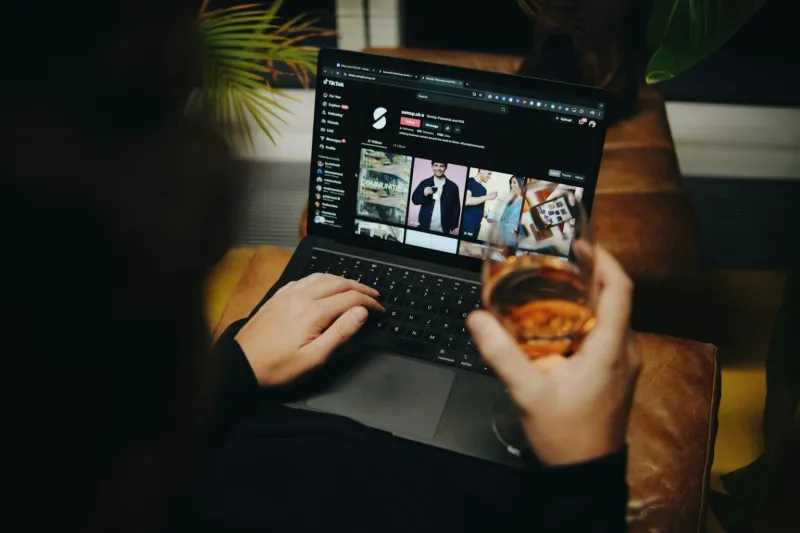
Photo: independent creator working on laptop with digital privacy and ownership concept, via cyberessentials.org
Let's be honest about what's been happening. You spend hours making something—a video, an essay, a photo series, a podcast—and then you upload it to a platform that immediately owns the terms of its distribution. They can suppress it, monetize it with ads you never approved, feed it into an AI training dataset, or just delete your account one afternoon with no real explanation.
This is the deal most creators signed without reading the fine print. And for a while, the trade-off felt worth it—reach, discoverability, the algorithm doing the heavy lifting. But the cracks are showing. Platforms change their rules constantly. Monetization gets cut. Accounts get banned. And the audience you spent years building? It lives on their servers, not yours.
The good news: you have more options than you did even three years ago. Here's a practical, step-by-step breakdown of how to reclaim ownership of your creative work in the platform age.
Understand What You're Actually Giving Up
Before we talk tools, let's name the problem clearly, because "data ownership" can sound abstract until you see what it means in practice.
When you post on Instagram, Meta's terms of service grant them a "non-exclusive, royalty-free, transferable, sub-licensable, worldwide license" to use your content. That's a mouthful, but it basically means they can use your photos and videos however they want, commercially, without paying you. TikTok's terms are similarly broad. YouTube is better in some ways—you retain copyright—but the platform controls distribution, monetization eligibility, and can demonetize or remove your content at will.
This isn't a conspiracy. It's just how centralized platforms work. They need that control to operate. But that doesn't mean you have to accept it as the only option.
Start With Your Own Home Base
The single most impactful thing you can do is establish a home base that you actually control. That means a website or publication on infrastructure you own or can export from freely.
WordPress (self-hosted, not WordPress.com) is still the gold standard for this. Your content lives in a database you control, on a server you pay for. If your hosting company goes under or raises prices, you pack up and move. Nothing is lost.
Ghost is a strong alternative, especially for writers and newsletter creators. It's open source, you can self-host it, and it has built-in subscription and payment tools. The Ghost Foundation operates as a nonprofit, which means their incentives aren't aligned with extracting maximum value from your data.
Hugo or Eleventy are static site generators favored by developers who want maximum control and minimal dependencies. Your entire site is just files—portable, fast, and impossible to "platform" away from you.
Whichever you choose, the principle is the same: your primary publishing home should be somewhere you can export everything, own your subscriber list, and operate independently of any single company's goodwill.
Own Your Audience List
Your email list is the most valuable thing you can build as a creator. Not your follower count. Not your subscriber numbers on YouTube. Your email list.
Here's why: email is an open standard. No company owns it. If Mailchimp raises its prices or gets acquired, you export your list as a CSV and move it somewhere else. Your subscribers come with you. Try doing that with your Instagram followers.
Tools to consider:
- Buttondown – indie-built, privacy-respecting, and straightforward for writers
- Listmonk – fully open source, self-hosted, completely free
- Brevo (formerly Sendinblue) – more full-featured, reasonable pricing for growing lists
The platform doesn't matter as much as the habit: every piece of content you publish anywhere should include a clear invitation to join your email list. That's the thread that keeps your audience yours.
Use Open Standards for Your Content
This one is more technical, but it matters more than most creators realize. Open standards are formats and protocols that nobody owns and anyone can implement. They're the difference between content that's portable and content that's trapped.
RSS is the original open standard for content distribution. If you publish a podcast, your RSS feed is literally your podcast—not Spotify's version of it, not Apple's. Any app that supports RSS can access it. Keep your RSS feed healthy and canonical.
ActivityPub is the protocol powering the fediverse—Mastodon, Pixelfed, PeerTube, and a growing list of platforms. When you post on a Mastodon instance, your content can be followed from any other ActivityPub platform. No single company controls the network. Platforms like Flipboard and even Threads have started implementing ActivityPub, which means the fediverse is becoming harder to ignore.
WebSub and IndieWeb standards like Webmentions let your personal site participate in the social web without being dependent on any platform. It's a bit nerdy to set up, but the IndieWeb community has solid documentation and a genuinely helpful community if you want to go deep.
Get Strategic About Platform Use
None of this means you have to abandon social media entirely. Reach is real, and platforms do provide it. The shift is in how you think about the relationship.
Use platforms as distribution channels, not as home bases. Post on Instagram, TikTok, or YouTube—but always drive people back somewhere you own. The platform is a funnel, not a destination.
Also, diversify. If 90% of your traffic comes from one platform, you're one algorithm update away from a crisis. Spread across two or three channels, and make sure at least one of them is something you control (your site, your email list, your podcast feed).
Check Your Licensing Before You Publish
This is the step most creators skip, and it costs them later. Before you put anything out into the world, decide what rights you're granting and to whom.
Creative Commons licenses let you be specific. You can say "share this freely, but give me credit" (CC BY), or "share it, but not for commercial purposes" (CC BY-NC), or "share it only if you keep the same license" (CC BY-SA). These are legally recognized, widely understood, and a powerful way to communicate your intent without hiring a lawyer.
For work you want to keep more tightly controlled, standard copyright applies automatically—but you still need to register it with the US Copyright Office if you want to pursue infringement legally. It's a $65 filing and absolutely worth it for work you care about.
Start Today, Not Someday
Here's a realistic starting point if this all feels overwhelming:
- This week: Set up a free Ghost or WordPress site. Even a basic one. Claim your domain name.
- This month: Start collecting email addresses. Even a simple sign-up form with a compelling reason to subscribe.
- This quarter: Audit your content on major platforms. Know what you've published, what the terms say, and what you'd lose if the account disappeared tomorrow.
- Ongoing: Every new piece of content you publish, ask yourself: where does this live permanently, and how do people find their way back to me?
Ownership isn't a one-time decision. It's a practice. But every step you take toward controlling your own creative infrastructure is a step away from being at the mercy of someone else's business model. Your work is worth that effort.