Steal This Painting (Legally): America's Museums Are Handing Out Millions of Masterpieces
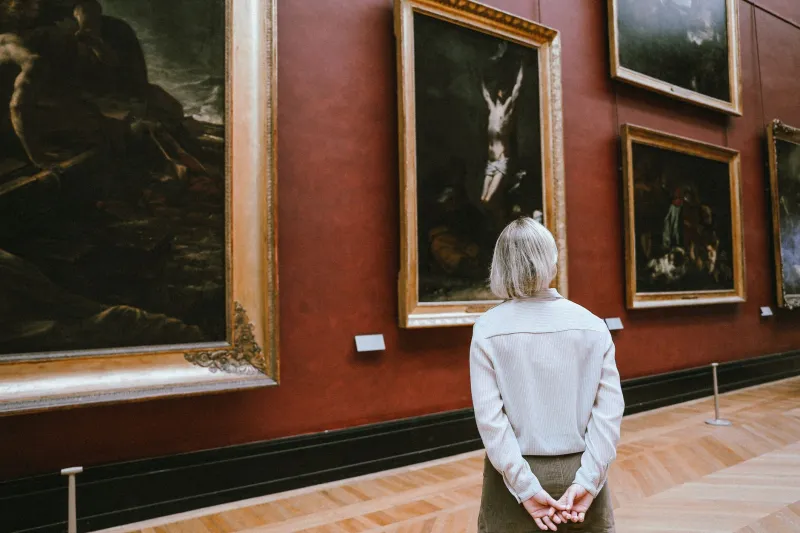
Somewhere in your city, a museum is sitting on a collection that took centuries to assemble, staffed by world-class scholars, digitized at absurdly high resolution—and it's giving all of it away. For free. On purpose.
And most creators scroll right past it on their way to stock photo sites.
The open-access movement in American museums is one of the most quietly consequential cultural policy shifts of the past decade, and it remains criminally underused. Let's fix that.
How We Got Here
In 2017, the Metropolitan Museum of Art launched Open Access, dropping roughly 400,000 images into the public domain under a Creative Commons Zero (CC0) license. The Smithsonian followed in 2020 with Open Access, releasing 2.8 million images—and later, 4.4 million—spanning art, science, history, and culture. The Getty, the Art Institute of Chicago, the Cleveland Museum of Art, the Rijksmuseum (a Dutch pioneer, but worth naming), and the National Gallery of Art have all made similar commitments.
The policy logic is sound and, frankly, progressive in the best sense: these collections were built with public money and public trust. Taxpayers funded the acquisitions, the conservation, the buildings. Locking the images behind licensing fees amounted to charging the public twice. Open access corrected that. Institutions that once treated image licensing as a revenue line now treat it as a mission statement.
Why Creators Should Care—A Lot
Here's the practical case. These aren't watermarked thumbnails. We're talking about files so high-resolution you can zoom into individual brushstrokes, print gallery-quality posters, or crop a 17th-century botanical illustration into a t-shirt graphic without a hint of pixelation.
What can you actually do with them? Nearly everything:
- Design and merch. Vintage posters, Japanese woodblock prints, and Art Deco patterns are design gold, and they're sitting there waiting.
- Editorial and content. Blog headers, video b-roll, book covers, newsletter art—no subscriptions, no attribution headaches (more on that below).
- Training data and AI experiments. If you're building with generative tools, CC0 collections are the ethically cleanest source material you'll find.
- Physical products. Textile designers are printing museum patterns onto fabric. Stationery brands are building entire catalogs from open-access ephemera.
- Education and remix culture. Collage artists, meme historians, and zine makers—this is a bottomless commons.
One designer we know built a thriving Etsy shop entirely from open-access astronomical illustrations and antique maps. Her entire inventory cost: zero dollars in licensing.
Where to Start Raiding
A few collections that punch hardest for working creators:
- The Met Open Access (metmuseum.org): 400,000+ images, searchable by artist, era, and material. The costume institute and musical instruments collections are underrated.
- Smithsonian Open Access (si.edu/openaccess): 4+ million images across 19 museums, including the National Air and Space Museum and the National Museum of African American History and Culture.
- Getty Open Content: Strong in photography, manuscripts, and antiquities.
- Art Institute of Chicago: Gorgeous high-res files with a clean CC0 designation for public domain works.
- National Gallery of Art (DC): Open access images of European and American masterworks.
- NYPL Digital Collections: Not strictly a museum, but the public domain holdings—especially the recently released 180,000+ items—are a design treasure trove.
The Fine Print (Because There's Always Fine Print)
Before you hit download, read the label. Not everything in these collections is CC0. Museums typically mark each image with its rights status—look for "Open Access," "CC0," or "Public Domain" designations. Images of works still under copyright, or photographs where the museum itself holds rights, may carry restrictions.
A few other watch-outs:
- Trademarks and privacy. A public domain photograph can still depict a trademarked logo or a living person. CC0 releases the copyright, not every legal claim.
- Cultural sensitivity. Some collections include Indigenous or sacred materials. Many institutions now flag these and ask for respectful, contextual use. Honor that. Free to use isn't the same as free of responsibility.
- Attribution, even when optional. CC0 requires no credit—but do it anyway. It's good commons citizenship, and it sends a signal to institutions weighing whether open access is worth it.
The Policy Point
Here's the opinion part, as promised: open access should be the default for every publicly funded collection in America, full stop. Every museum that hasn't joined is sitting on a public asset and calling it an asset. The institutions that opened their vaults have proven there's no downside—engagement goes up, relevance goes up, and the revenue they feared losing was always a rounding error.
Creators can help make that case the best way possible: by using the collections so visibly, so creatively, and so well that no museum dares close the doors again.
The masterpieces are out of the vault. Go steal something—legally.